Colorectal & General Surgeon
Offering colorectal expertise and experience to south east Sydney.
Edward obtained his Bachelor of Medicine/Bachelor of Surgery with first class honours from the University of Sydney. He subsequently completed his general surgical training and was awarded a Fellowship of the Royal Australasian College of Surgeons.
Recognising the complexity and importance of colorectal surgery, Edward pursued further specialisation in this field. He was accepted onto the highly competitive training program with the Colorectal Surgical Society of Australia and New Zealand (CSSANZ) — the only recognised colorectal training program in Australia — completing two years of sub-speciality colorectal training at Sir Charles Gairdner Hospital in Perth, WA, and St George Hospital in Sydney, NSW.
Upon obtaining full membership with the CSSANZ, and with a desire to further his colorectal skills, Edward completed a colorectal robotic fellowship at the prestigious Oxford University Hospitals in the United Kingdom — training that has equipped him to manage a wide range of complex colorectal and general surgical conditions.
Throughout his career, Edward has contributed significantly to the advancement of colorectal surgery, publishing numerous journal articles, presenting at national and international conferences, and participating in research aimed at improving surgical techniques and patient outcomes. He has also held formal teaching positions at the University of Oxford, University of Sydney, and University of New South Wales.
Outside of the operating room, Edward values time spent with his wife and two young daughters. He is an avid sports fan and, in his spare time, enjoys running and rugby.
Areas of expertise
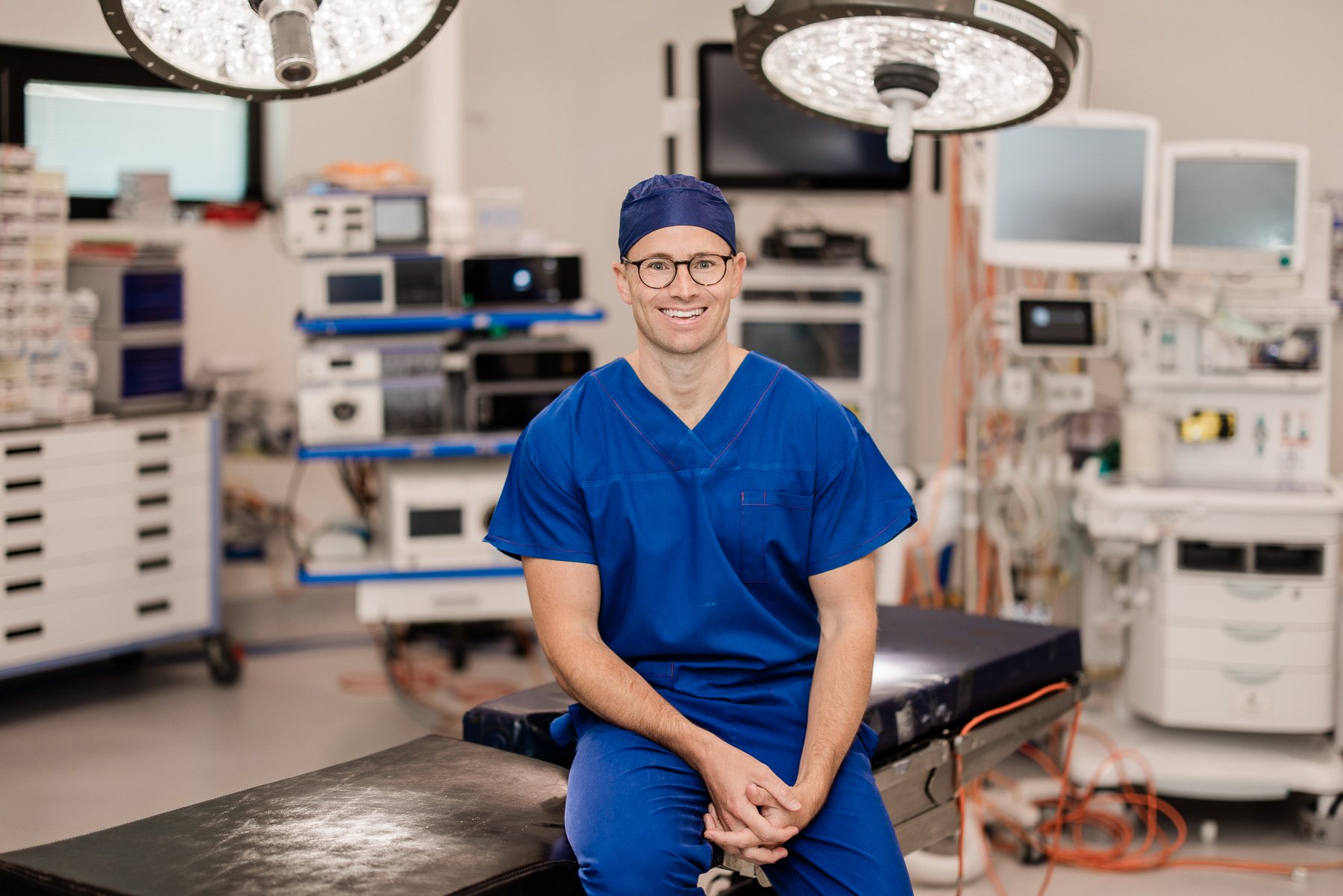
Edward has undergone extensive training in robotic and laparoscopic colorectal surgery — both minimally invasive techniques used to perform procedures on the colon or rectum.
Laparoscopic surgery: small incisions are made in the abdomen, through which specialised instruments and a laparoscope (a thin camera) are inserted. The surgeon views a magnified image on a monitor while operating. Benefits may include reduced postoperative pain, shorter hospital stay, quicker recovery, and smaller scars compared with open surgery.
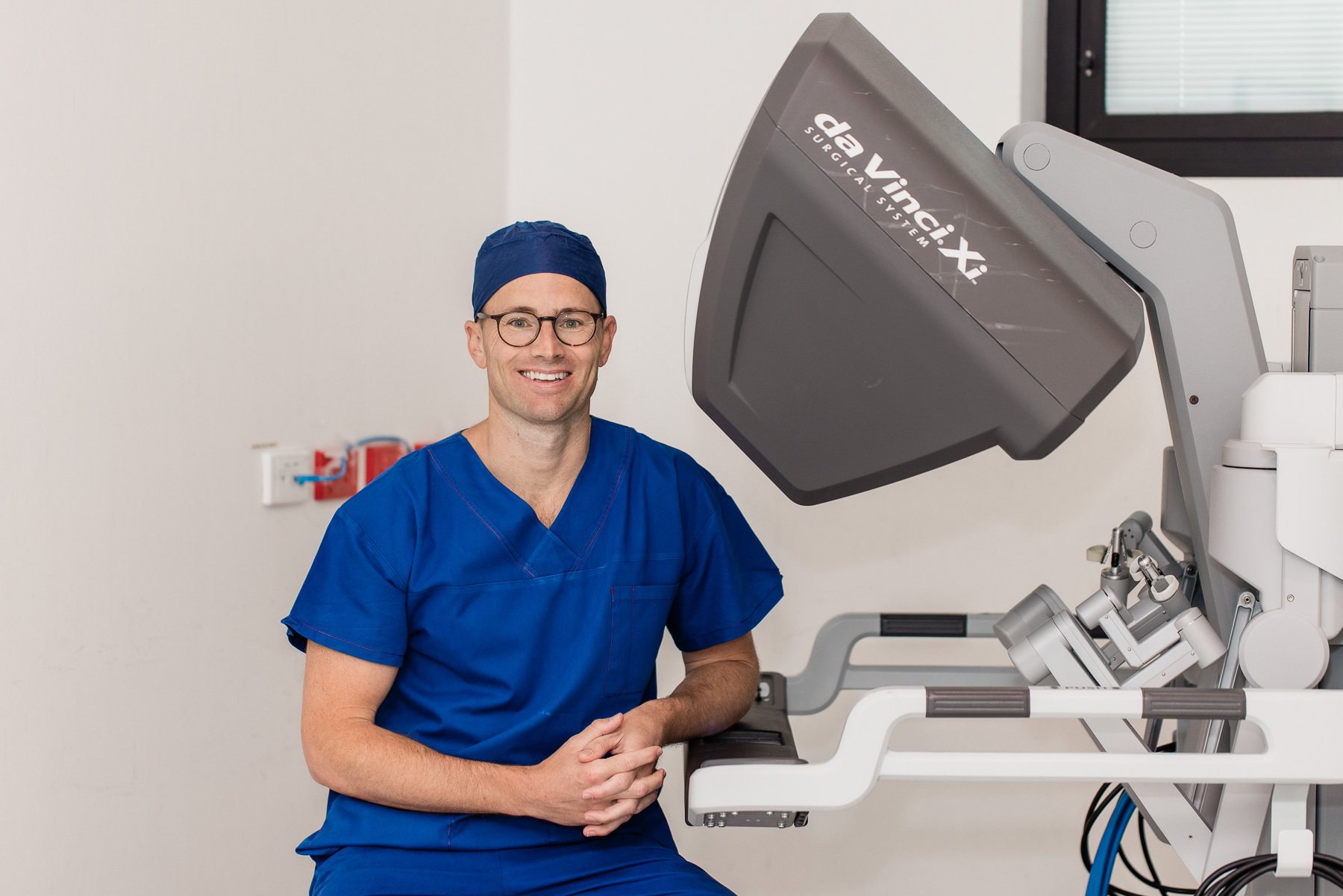
Robotic surgery: a robotic system with instrument-equipped arms and a high-definition camera is controlled by the surgeon from a console, viewing a magnified, three-dimensional image. This offers enhanced precision, dexterity and visualisation, with potential benefits including reduced trauma and quicker recovery.
TAMIS is a technique used to remove certain rectal tumours and lesions through the anus, without major abdominal incisions — reducing trauma to surrounding tissue, postoperative pain, and recovery time, typically for benign and early-stage malignant rectal lesions.
Colorectal cancer is the third most commonly diagnosed cancer in Australia, after breast and prostate cancers, and one of the leading causes of cancer-related death nationally.
Risk factors include age, family history of colorectal cancer or polyps, personal history of inflammatory bowel disease, certain genetic conditions such as Lynch syndrome, a sedentary lifestyle, obesity, smoking, heavy alcohol consumption, and diets high in red and processed meats.
Screening: Australia's National Bowel Cancer Screening Program offers free faecal occult blood testing to eligible individuals aged 50–74, with a positive result referred for further evaluation, usually colonoscopy.
Treatment depends on the stage, location, and the individual's overall health, and may include surgery, chemotherapy, radiation therapy, targeted therapy or immunotherapy, guided by a multidisciplinary team.
Crohn's disease can affect any part of the digestive tract and causes inflammation extending deep into the tissue, with symptoms including abdominal pain, diarrhoea, fatigue and weight loss. Complications can include strictures, fistulas and abscesses.
Ulcerative colitis affects the colon and rectum, causing inflammation and ulcers in the lining of the colon, with symptoms including abdominal pain, bloody diarrhoea, urgency, weight loss and fatigue.
Treatment typically aims to reduce inflammation, relieve symptoms and prevent complications through anti-inflammatory medication, immune system suppressors and biologics, with surgery sometimes necessary to remove damaged portions of the digestive tract.
AIN is a pre-cancerous condition affecting the cells lining the anus, often associated with HPV infection — particularly types 16 and 18. It is graded as low-grade (LSIL) or high-grade (HSIL) depending on the depth of abnormal cell growth.
Diagnosis is typically made through anal cytology or biopsy. Treatment depends on severity and may include observation, topical medications, ablative therapies, or surgical excision for more advanced or persistent disease.
Early detection and treatment can help prevent progression to invasive anal cancer, and HPV vaccination is recommended as a preventive measure.
Faecal incontinence — the inability to control bowel movements — can result from nerve or muscle damage, or conditions such as diarrhoea, constipation or rectal prolapse.
Pelvic organ prolapse occurs when pelvic organs descend or bulge into the vagina due to weakened support, causing pressure and urinary or bowel dysfunction.
Pelvic pain can arise from muscle spasm, inflammation, nerve irritation or structural abnormalities. Management is often multidisciplinary, involving physical therapy, medication, lifestyle changes and, where needed, surgery.
Advanced colonoscopy uses high-definition imaging for clearer visualisation of the colon and rectum, improving detection of polyps, tumours and inflammatory changes.
Chromoendoscopy and narrow-band imaging enhance the visibility of subtle lesions and vascular patterns. Endoscopic mucosal resection (EMR) allows removal of larger polyps or superficial tumours without open surgery.
These techniques also play a key role in the ongoing surveillance and management of inflammatory bowel disease.
Diverticulosis is the presence of small pouches in the colon wall, often without symptoms. Diverticulitis occurs when these pouches become inflamed or infected, causing abdominal pain, fever and changes in bowel habits, with possible complications including abscess or perforation.
Risk factors include ageing, a low-fibre diet, obesity, inactivity and smoking. Treatment ranges from dietary modification for mild cases to antibiotics and, in severe or complicated disease, surgery.
Haemorrhoids are distended anal cushions that can develop internally or externally, causing bleeding, pain and discomfort. Treatment ranges from lifestyle changes and topical medication to minimally invasive procedures or surgery in severe cases.
Anal fistula is an abnormal tract between the anal canal and the skin, usually treated with surgical intervention to remove the tract and promote healing.
Anal fissure is a small tear in the anal lining causing sharp pain and bleeding, generally managed with dietary changes, topical medication and, occasionally, a minor procedure.
Inguinal hernia occurs when tissue protrudes through a weak spot in the inguinal canal in the groin, causing a bulge, discomfort or pressure — treated with open or laparoscopic surgical repair.
Incisional hernia develops at the site of a previous surgical scar, where tissue protrudes through a weakened area — treated with surgical repair tailored to the size, location and the patient's history.
Appendicitis is inflammation of the appendix, typically presenting with abdominal pain migrating to the lower right abdomen, and is treated as a surgical emergency with appendectomy.
Small bowel obstruction is a blockage in the small intestine caused by adhesions, hernias, tumours or other structural issues, managed with bowel rest, fluids and, where necessary, surgery.
Small bowel tumours are relatively rare and may be benign or malignant, with treatment depending on type, stage and location.
Pilonidal disease is the formation of a cyst or sinus tract in the skin near the tailbone, causing pain, swelling and drainage. It is more common with thick or coarse hair, prolonged sitting, or anatomical predisposition.
Treatment ranges from conservative measures such as warm compresses and antibiotics, to incision and drainage of an abscess, surgical excision of the cyst or sinus tract, or laser hair removal to reduce recurrence.
Where to find Dr. Cooper
Sydney Colorectal Associates
Hurstville Rooms
Suite 3, Level 2
37 Gloucester Road
Hurstville, NSW, 2220
Kogarah Rooms
(Entrance on South Street)
Suite 403, Level 4
131 Princes Hwy
Kogarah, NSW, 2217
Operating at
- St George Public Hospital
- St George Private Hospital
- Hurstville Private Hospital
- Kareena Private Hospital
- Ramsay Surgical Centre, Miranda